Growing up in Tashkent, winters could get cold. Whenever my mother made a steaming pot of authentic borscht, it brought total warmth, comfort and a feeling of home to our table.
What wine goes with borscht?
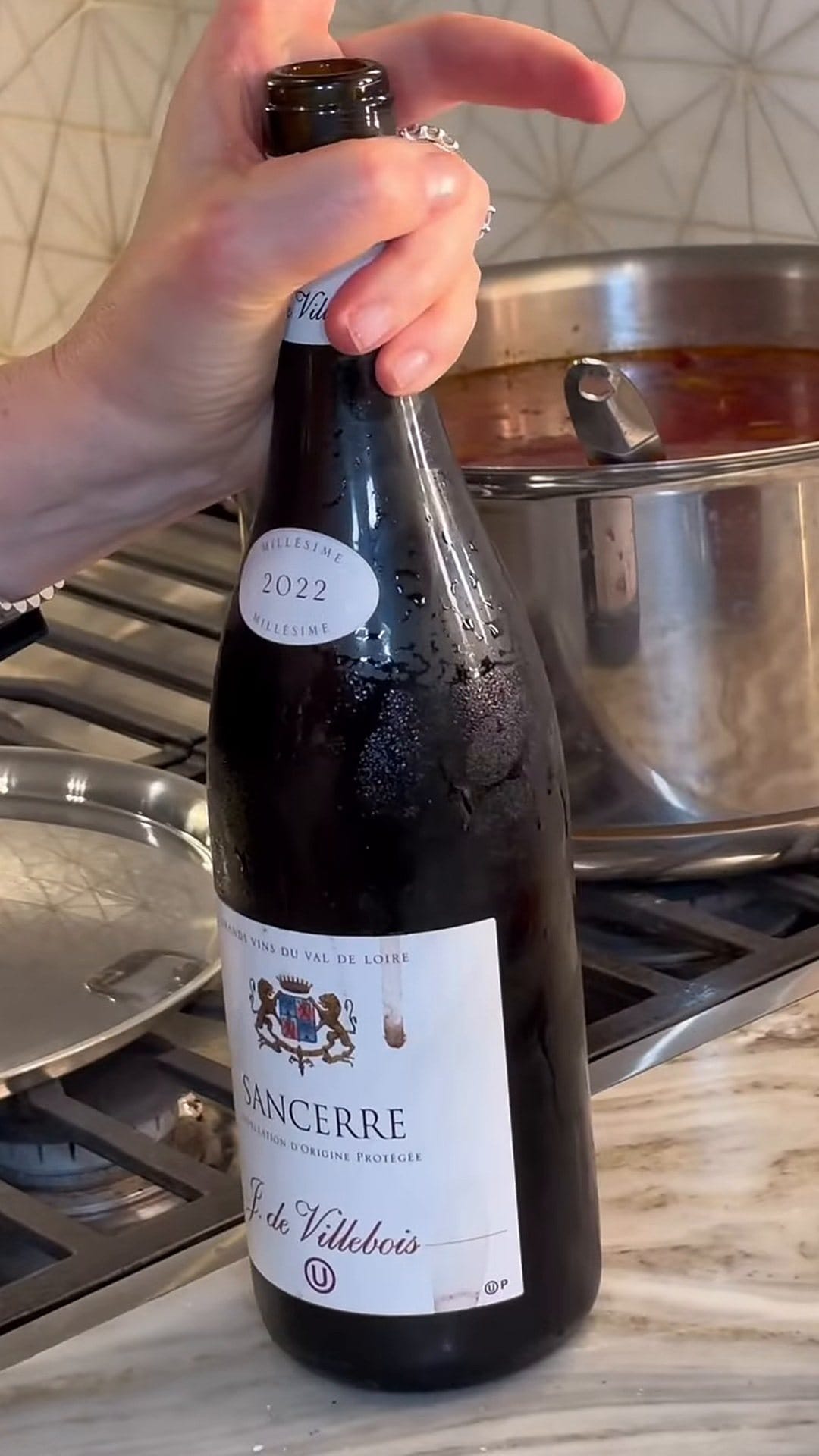
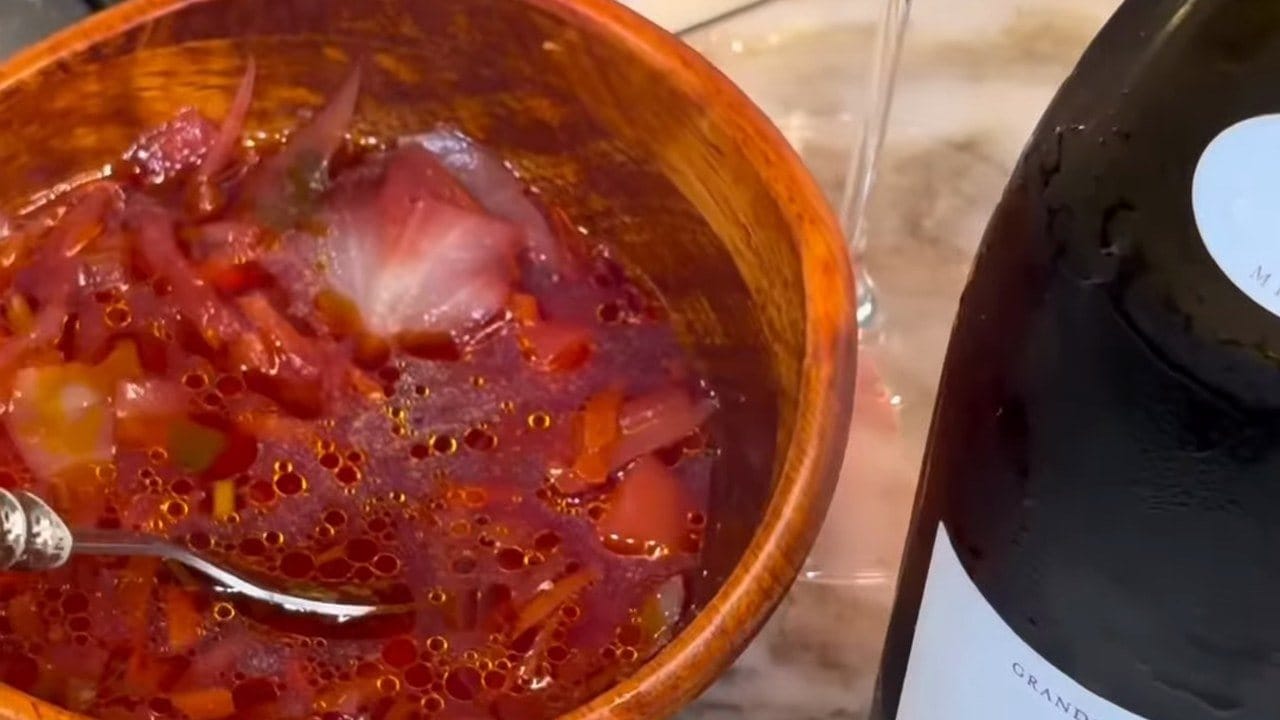
I pour J. de Villebois Sancerre Rouge, a refined Pinot Noir from France's Loire Valley. Its bright red fruit loves the sweet beets, and its crisp acidity cuts through the tangy broth without smothering the herbs.
Traditionally, borscht is made with a heavy meat broth, but I love taking the parve route (no meat, no dairy). By keeping it completely neutral, you don't hide behind animal fat. Instead, you unlock the unbelievable deep, earthy-sweet notes of fresh beets, dill and root vegetables. It's light, vibrant and soul-warming.
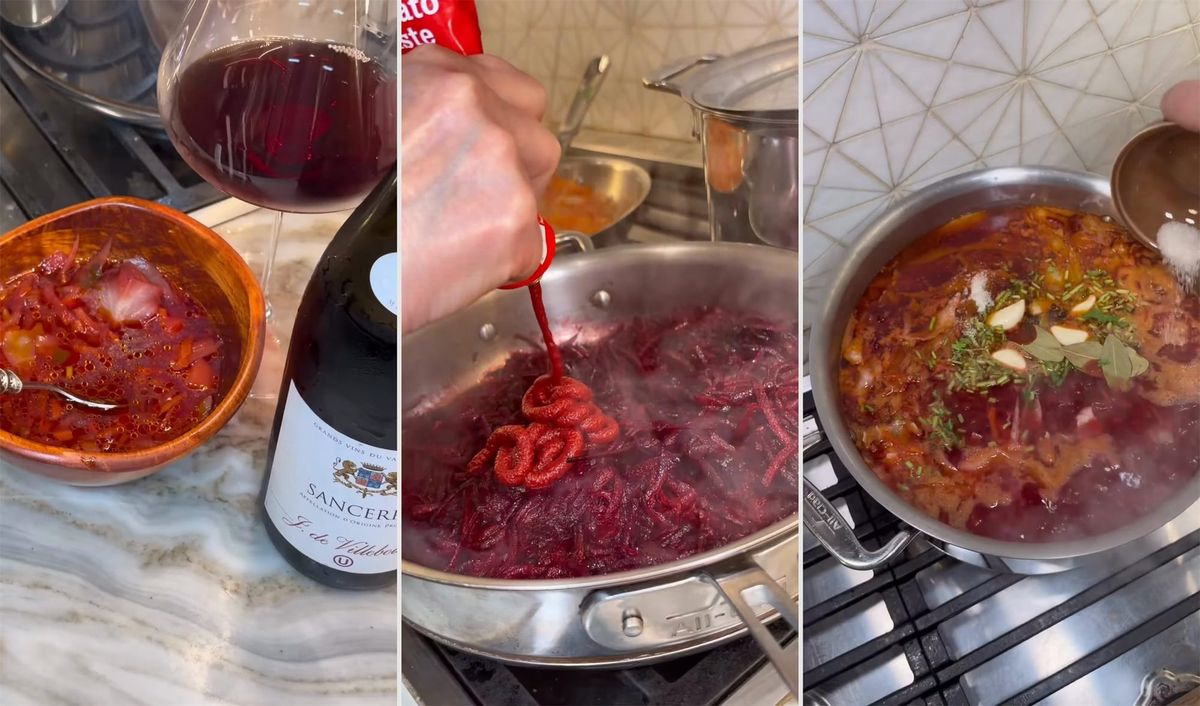
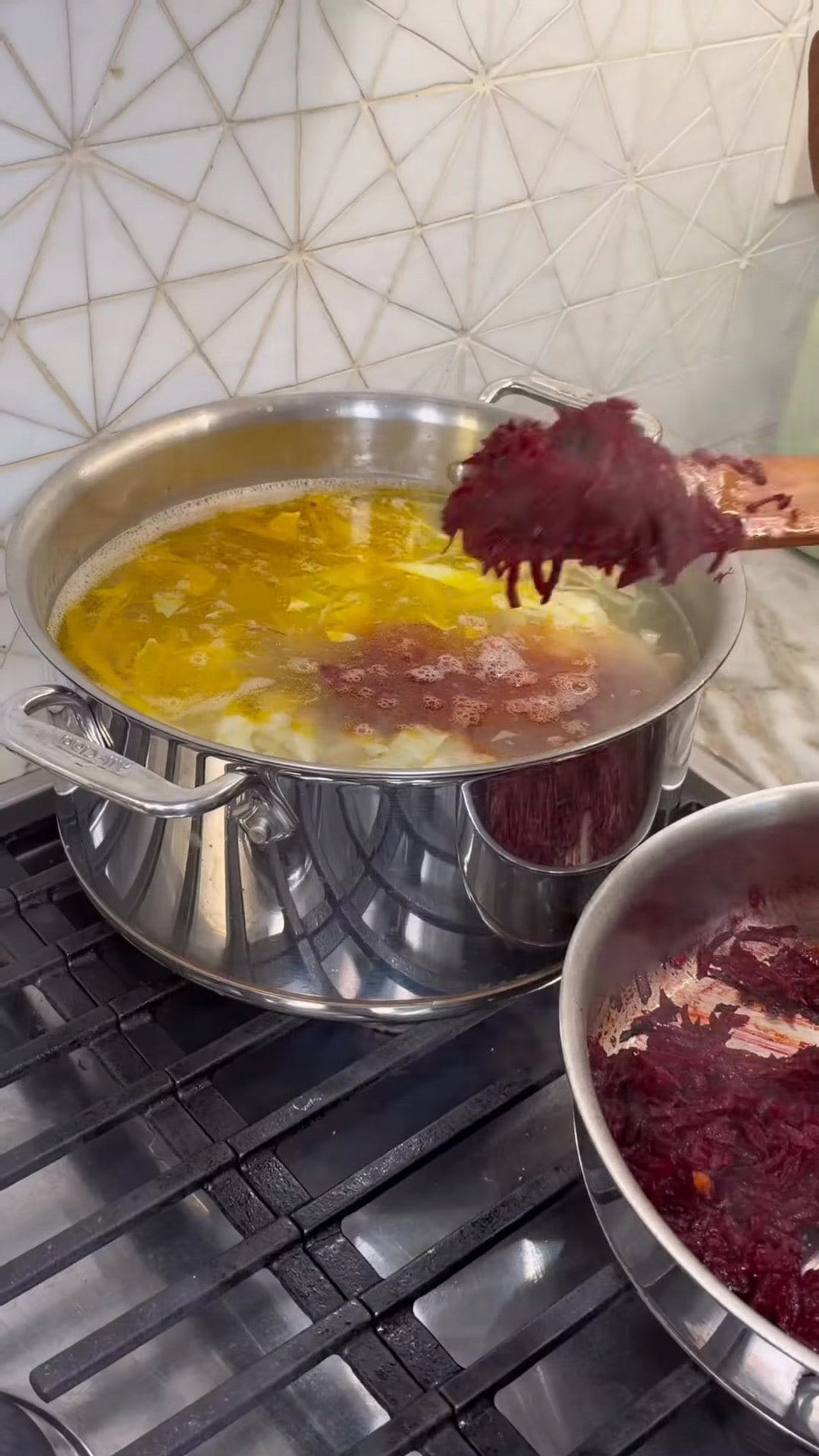
My version comes with two pro tricks. Pro trick #1: I sauté the beets separately with white wine vinegar for a gentle acidity. Pro trick #2: I add fresh raw beet water at the very end for an insane, bright red color!
Now, the wine. Heavy red wines will overpower a vegetable-forward soup, so I reach for J. de Villebois Sancerre Rouge. Sancerre Rouge is a refined Pinot Noir from the Loire Valley in France.
Its bright red fruit and gentle tannins (that drying grip on your gums) complement the natural sweetness of the beets. Its crisp acidity, that mouth-watering freshness, cuts right through the tangy white wine vinegar broth without smothering the fresh herbs. Absolute perfection!
What Wine Goes with Borscht?
The pairing
Parve Tashkent-style borscht&J. de Villebois Sancerre Rouge
Bright red fruit meets the sweet beets, and crisp acidity cuts the tangy broth without smothering the herbs.
Tasting notes
2022 · 100% Pinot Noir · Sancerre, Loire Valley, France · Imported by Royal Wine Corp
- Kosher OU
- Passover Kosher for Passover
- Look
- A delicate ruby red
- Nose
- Ripe wild strawberries and raspberries jump out first, then a little pinch of white pepper
- Taste
- Light to medium in body and silky, with crisp acidity and a soft, earthy, mineral streak, all in elegant balance
- Pairs with
- Vegetable-forward soups like this borscht, where a heavy red would take over
- Aciditymouth-watering freshnessFresh
- Tanninthat drying grip on your gumsLight grip
- Bodyweight on the tongueLight-medium
Verdict Refined and elegantly balanced, and a perfect match for a parve borscht
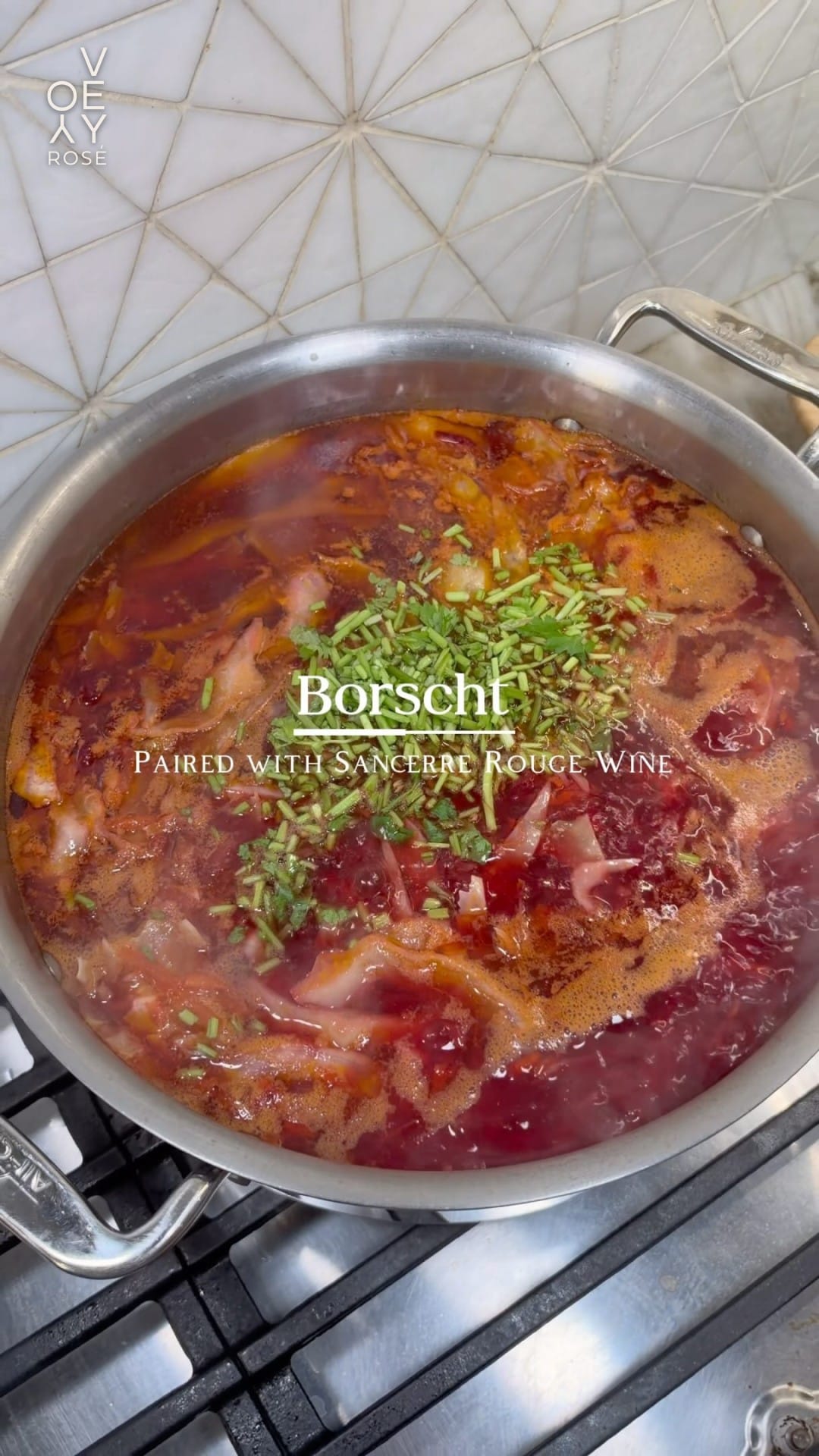
In the kitchen
How to Make Parve Tashkent-Style Borscht
Ingredients
- 4 medium red beets, peeled and shredded or finely diced
- 1 large carrot, grated
- 1 yellow onion, diced
- 2 medium yellow potatoes, cubed
- 2 cups shredded green cabbage
- 3 cloves garlic, minced
- 2 Tbsp tomato paste
- 1 to 2 Tbsp white wine vinegar, for a gentle, elegant tangy snap
- 1 tsp sugar, to balance the acidity
- 6 cups vegetable broth or water
- 2 bay leaves
- Fresh dill and flat-leaf parsley, chopped
- Olive oil, salt and freshly cracked black pepper
Method
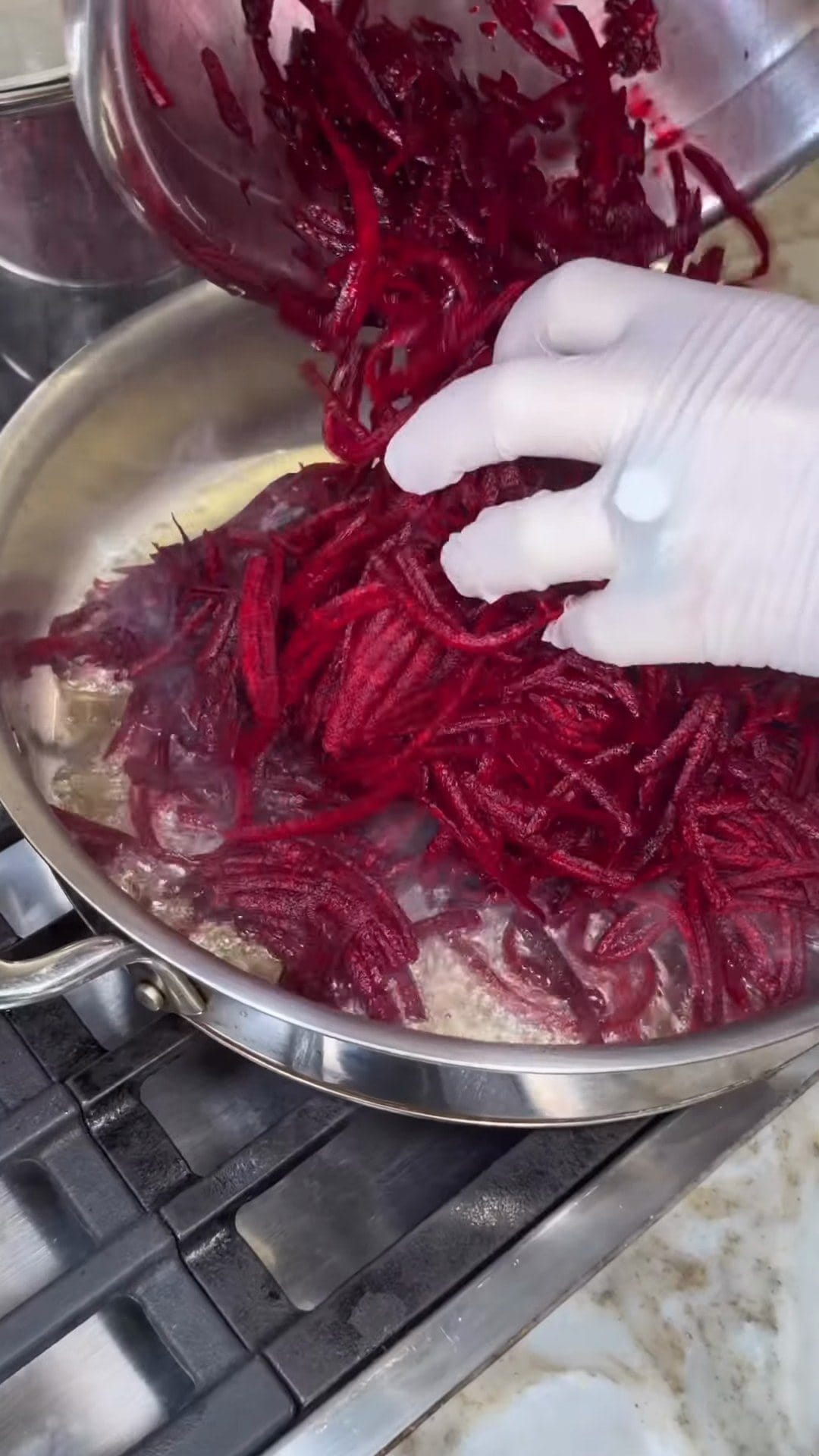
- Sauté the beets separately. Save a small handful of the raw shredded beets for later. In a separate skillet, sauté the rest in olive oil with the white wine vinegar and sugar. Cooking them on their own caramelizes their natural sugars and softens them gently. You get a concentrated sweet-and-sour beet base, and boiling water never washes out that rich flavor.
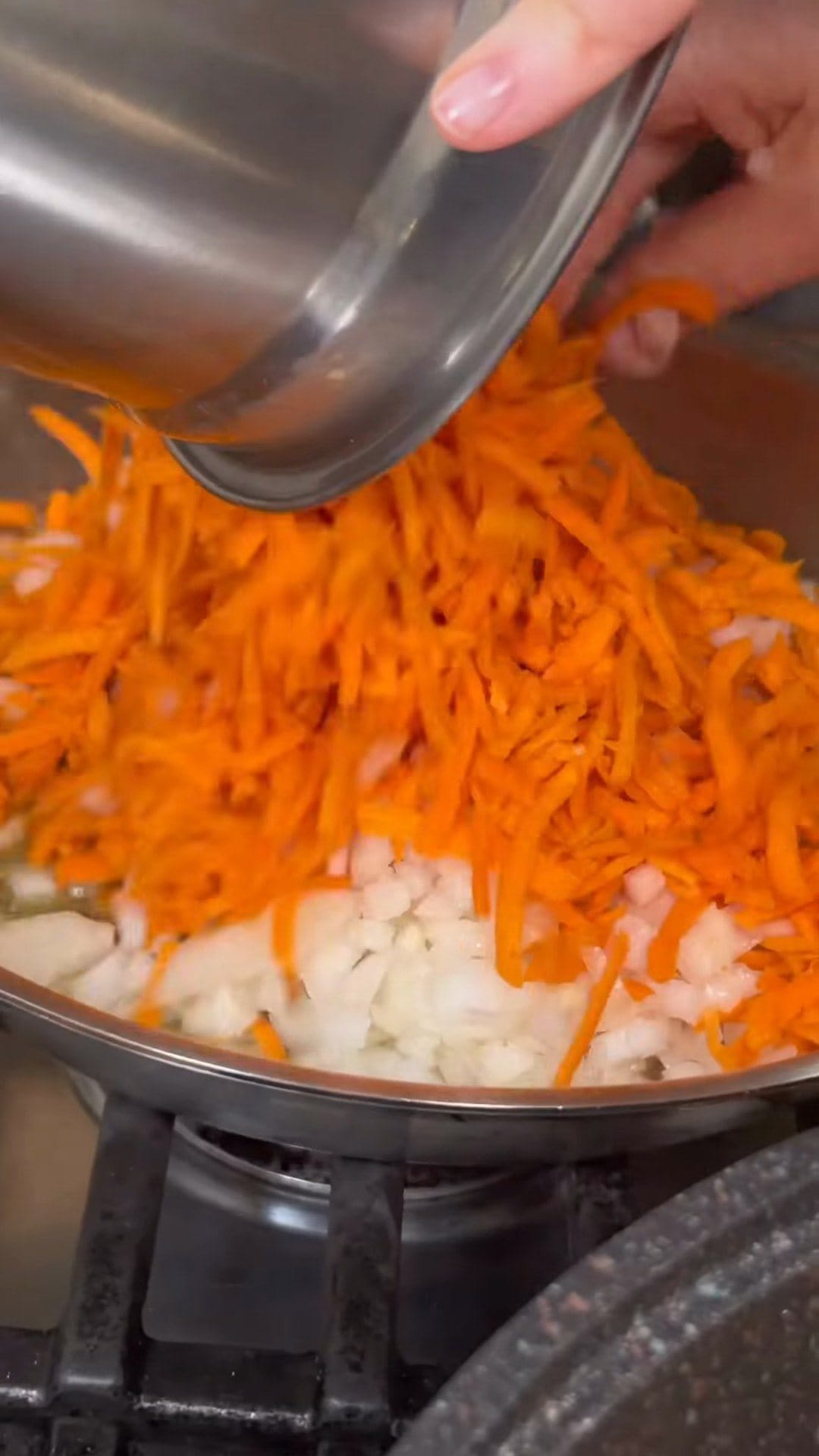
- Build the soup pot. In your main soup pot, heat olive oil over medium heat. Sauté the onion and carrot until soft, then stir in the garlic and tomato paste for a minute to release their aromatics.
- Add the broth and vegetables. Pour the vegetable broth straight into the pot. Add the potatoes, cabbage and bay leaves, and season with salt and pepper. Bring to a boil, then reduce the heat and simmer until everything is tender.
- The bright red secret. Steep the raw beets you saved in a little water, then strain, keeping that vivid raw beet liquid.
- Finish. Stir the sautéed beets and the raw beet water into the pot. Toss in a generous handful of fresh dill and parsley, then turn off the heat.
- Rest. Let it sit for 10 minutes, so all those rich, earthy flavors meld together into a brilliant crimson bowl!
More comfort from my Tashkent kitchen: Kosher Lagman, the noodle stew I spent years chasing, with Hajdu Grenache, and for the rest of your Shabbat table, five challah dips with L'Indiscrète Sancerre.
Save this for your next cozy Shabbat meal, and send it to someone who loves a warm, comforting bowl of soup!
L'Chaim!